Introduction
We are fond of west-coast sunsets and the expansive curves of the Tamil Nadu beaches, however, monsoon reverses the order. The waves become bigger, sand bars change at night and what appears smooth on the surface can have a rapid rip.
Once or twice of the rainy-season journeys between Varkala and Kovalam (Kerala) to Kanyakumari and Mahabalipuram (TN), this is the safety advice that we wish someone had given us: clear-cut rip current indicators, what those beach signs are all about, and a simple plan of action, which can be followed even when the weather is shifting every half an hour.
Monsoon Windows and What Actually Changes
- Kerala (southwest coast): Southwest monsoon June-September. Anticipate heavier swell, drifting sand bars, sideways-pulling longshore currents and short and rough shore-breaks.
- Tamil Nadu (southeast coast): Northeast monsoon October-December brings wind, rain squalls and choppy cross-sea. Apr-May Pre-monsoon may be dry and smoky with afternoon sea breezes and rips caused by the tides.
What changes on the beach:
- Breakers move closer to shore; channels between sandbars deepen.
- Lifeguards change or close areas of swimming very fast; there are more red flags.
- Rock shelves, steps are slippy; rogue waves are higher than lines of dry sand.
- The reduction in visibility during squalls is rapid–this is the only place to be in flagged areas.
Quick Planner: Costs, Timings and Essentials
| Lifeguard hours at patrolled beaches | ~8:00 AM–6:00 PM | Varies by beach; respect closures after hours |
| Parking (popular beaches) | ₹20–100 | Arrive early on weekends |
| Lockers/showers | ₹20–80 | Use only reputable facilities |
| Beach beds/umbrellas (where allowed) | ₹100–300 | Keep back from the swash zone in monsoon |
| Emergency numbers | 112 (pan‑India), 108 medical | Save your exact beach pin for calls |
| Best swim window (if green/yellow flags) | Morning before 10:30 AM | Lighter winds, clearer water |
| Absolute no‑swim signs | Red/double‑red flags, “Beach Closed” boards, lightning | Treat as final—don’t negotiate with the sea |
Beach Flags in India: What Each Color Means
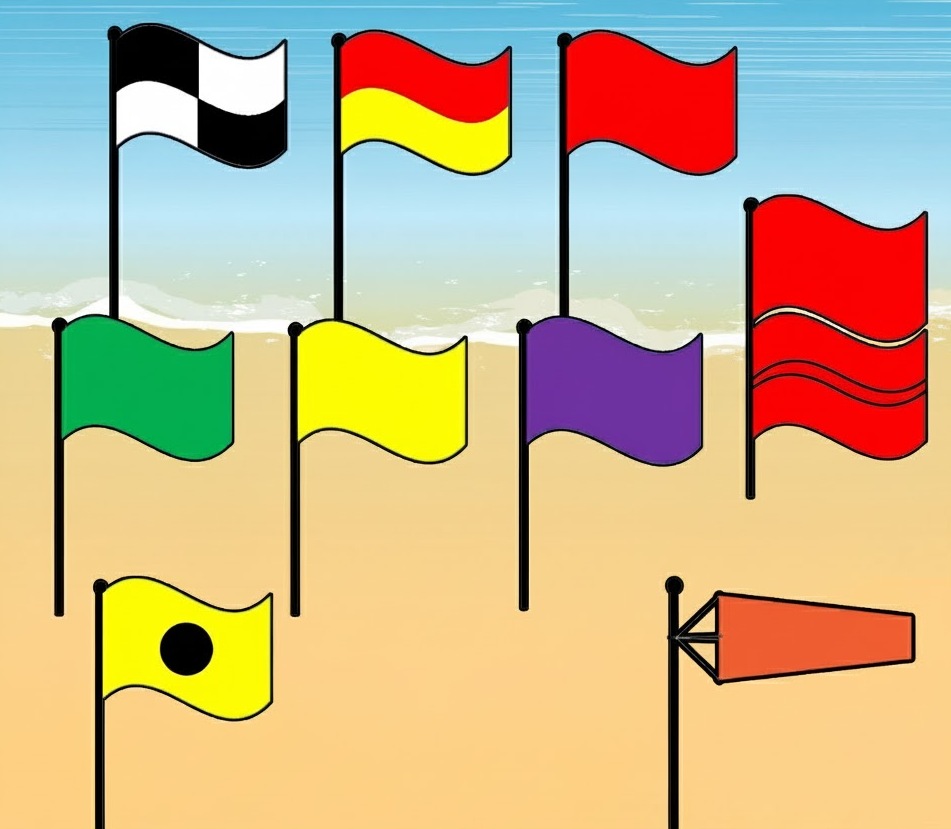
| Green | Low hazard | Swim only in designated area; stay within depth; supervision still needed |
| Yellow | Moderate hazard (surf/currents) | Confident swimmers only; keep to waist/chest‑deep water; children wear flotation and stay within arm’s reach |
| Red | High hazard — No swimming | Stay out of the water; walk the shore only |
| Double Red (where used) | Water closed to public | Do not enter, even ankle‑deep (surge can knock you over) |
| Red & Yellow (two flags 30–100 m apart) | Patrolled swim zone | Swim between these flags only |
| Purple (where used) | Hazardous marine life (jellyfish, etc.) | Avoid water; ask guards for status and first‑aid station |
| Black‑and‑White Checkered | Surf‑craft zone (boards/boats) | No swimming; craft only |
| Windsock/Orange cone | Strong offshore wind (inflatable risk) | No inflatables; stay in flagged zone or onshore |
Note: Not every beach displays all flags. If in doubt, ask the lifeguard; they know the day’s sandbars and channels.
Monsoon‑Specific Hazards (Kerala/TN)
- Shore-break slams: High waves smash on along the shore; can easily break ankles/backs. Enter and exit slowly, side-on.
- Longshore current: Sideways pull, it silently drags you along the beach but be aware of what you are doing visually and get re-centered between flags every few minutes.
- River mouth/estuaries: The drains of freshwater form strong rips and concealed holes–not during monsoon.
- Stones and cement steps: Greasy with moss; waves returned back and forth. Stay off when seas are up.
- Lightning and squalls: When you hear thunder or can follow a line of a storm, get out of the water and off the open sands and take cover in a solid structure or vehicle (not near single palm trees).
- Jellyfish/bluebottle stings (west coast): Rinse with sea water (not fresh), pluck out tentacles with a card, and then hot water compress (where possible). Medical assistance in case of serious responses is required.
| Do | Don’t |
|---|---|
| Swim only between red‑and‑yellow flags | Enter near rocks, groynes or river mouths |
| Learn rip signs; keep kids within arm’s reach | Turn your back on waves at the edge |
| Exit if flags go red or thunder rolls | Stay in after lifeguards close the water |
| Enter and exit slowly in shore‑break | Dive head‑first into shallow, dumping waves |
| Use seawater to rinse jellyfish stings first | Use freshwater or rub sand vigorously (worsens stings) |
| Keep one adult as “dry spotter” at all times | Everyone in the group in water simultaneously |
Conclusion
Kerala and Tamil Nadu have beautiful monsoon beaches, which are patient-preparation-rewarding. Read the flags, visit the lifeguard tower first, understand rip signals, and stay in a shallow area marked with flags.
Carry a small kit, a kids or poor swimmer flotation vest and the humility to say it is a day when red flags are raised. And do that, you will not miss the fun of the season without making too much unnecessary trouble.
