Introduction
Bus transport is the bloodline of South India – cities, towns, and even the smallest villages are linked. Be it the backwaters of Kerala, highways of Tamil Nadu or the hills of Karnataka, state-operated bus services provide every traveler with a choice that fits his or her pocket and comfort.
However, with such a variety of classes, such as Airavat of KSRTC, Ultra Deluxe of SETC or Super Luxury of TSRTC, it may seem hard to choose the right one. This guide makes the variety easy by describing the types of classes, kinds of seats, and baggage regulations in the main South Indian transport corporations.
Overview of South Indian State Transport Corporations
All the southern states have their own government bus network:
- KSRTC (Karnataka State Road Transport Corporation). Flies within and between states, with its high-end Airavat series and its timely services.
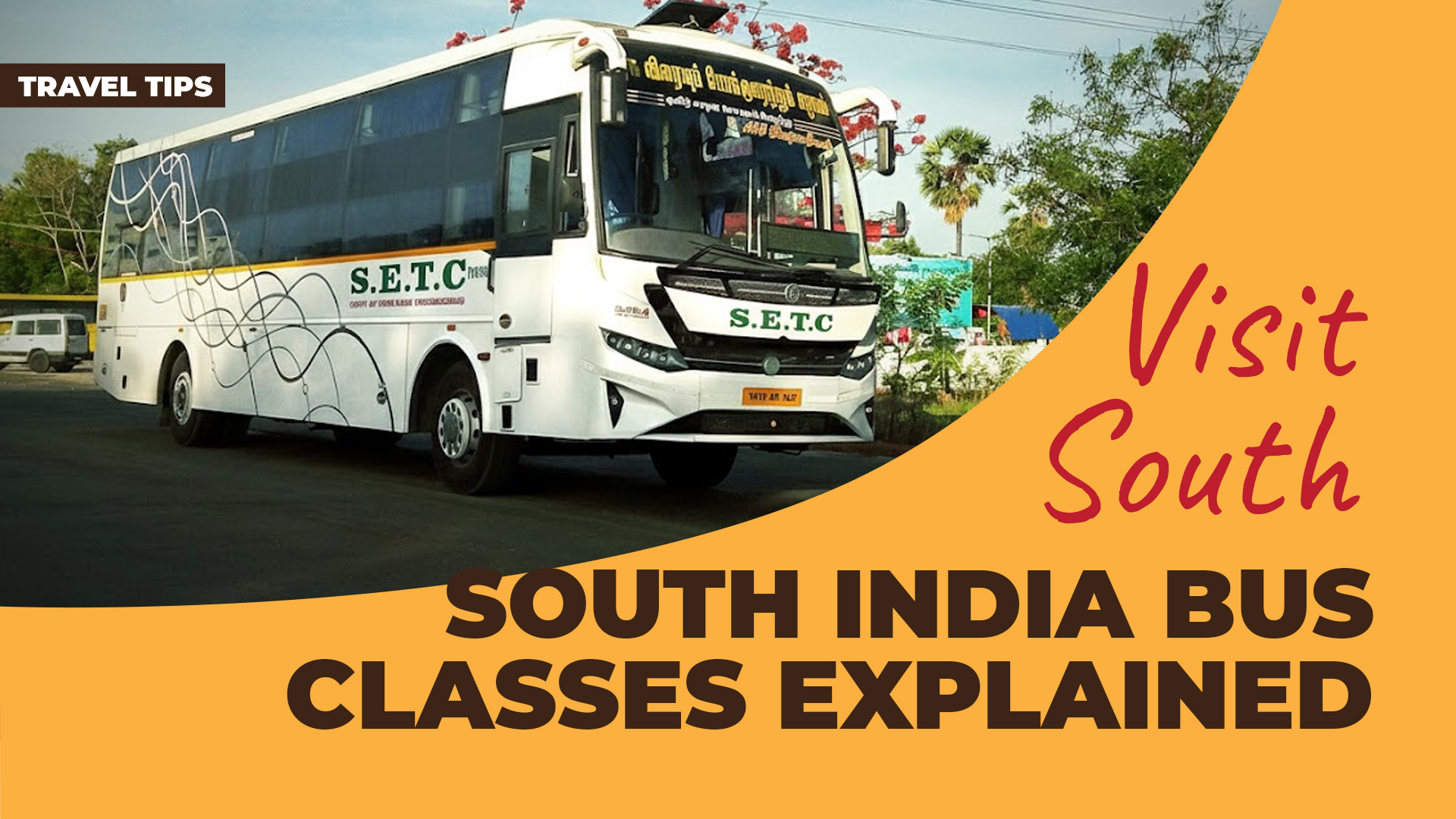
- SETC (State Express Transport Corporation, Tamil Nadu) Concentrates on long distance routes between Tamil Nadu and the other states such as Kerala and Karnataka.
- TSRTC (Telangana State Road Transport Corporation) Post-bifurcation successor of APSRTC, providing well-maintained fleets in urban and rural Telangana.
- APSRTC (Andhra Pradesh State Road Transport Corporation). Among the oldest public transport systems in India that has a wide rural and intercity network.
Main Bus Classes Explained
All the corporations have a variety of classes, including simple non-AC and full-comfort sleeper buses. Here’s a quick breakdown:
- Ordinary / Express:
Non-AC buses with fixed seating and low cost. Typically the least costly alternative. - Deluxe / Ultra Deluxe:
Non-AC yet more spacious and comfortable than regular buses; reclining seats are popular. - Super Luxury / Semi‑Sleeper:
AC coaches that have reclining seats, better legroom and smoother suspension. - Sleeper / AC Sleeper:
Night-ready, cushioned bunks, and individual lighting. - Volvo / Scania / Airavat Club Class (KSRTC):
High-quality air-conditioned services that are highly comfortable, USB ports, and luggage areas.
Comfort, Seats & Luggage
| Bus Class | AC | Seat Type | Luggage Allowance |
|---|---|---|---|
| Ordinary / Express | ❌ | Standard fixed seats | 10–15 kg (below seat/back) |
| Deluxe / Ultra Deluxe | ❌ | Reclining cushion seats | 15–20 kg |
| Super Luxury / Semi-Sleeper | ✅ Partial | Reclining seats, leg rest | 20 kg in side luggage bay |
| AC Sleeper | ✅ | Upper & lower bunks | 20–25 kg |
| Premium Volvo / Scania (Airavat Club Class) | ✅ | Push‑back seats, wide leg space | 25–30 kg undercarriage |
How to Choose the Right Bus Class
It should be a matter of distance, time, and comfort. A Deluxe or Express bus is enough when commuting to a short distance (less than 3 hours). To travel at night longer than 5-6 hours, seek out a Super Luxury or Sleeper.
In case you have heavy luggage or you are traveling with family, premium Volvos or Airavats have additional storage and better rides. Budget travelers tend to combine and alternate – use a normal bus on day trips and use sleeper or AC buses on long distance journeys.
Packing & Luggage Tips
- Always leave valuables (money, documents, electronics) in your handbag or backpack, but not in the luggage bay.
- Carry light luggage bags; no metal or oversized suitcases.
- Label your luggage tags properly, particularly when travelling inter-state.
- The majority of premium buses currently have overhead racks that can carry small backpacks and underbelly compartments that can carry bigger bags.
- Carry light – heavy luggage may be a burden in semi sleeper.
Conclusion
The South Indian bus networks have transformed to become more than mere state services to comfortable and convenient travel.
You prefer the consistency of KSRTC, the extended SETC routes, or the low-priced APSRTC network – knowing the difference in the number of seats, classes, and luggage regulations can make you make better and more comfortable travel decisions. Intelligent travelers do not simply take a bus but they take a ride that suits them.
